

Your retinal serum shouldn't be a test of endurance for your skin barrier. Many skincare enthusiasts believe that peeling and redness are just the price you pay for a youthful glow, but this "no pain, no gain" approach often does more harm than good. You’ve likely felt the confusion of staring at your vanity, wondering: What Can You Use With Retinal? A Guide to Mixing Skincare Ingredients is exactly what you need to navigate these choices with total confidence.
We understand the fear of accidentally damaging your moisture barrier whilst trying to achieve that radiant K-beauty finish. It’s time to swap the guesswork for a proven "soothe-while-you-treat" philosophy that prioritises skin health. This article promises to help you master the art of layering your favourite formulas to reach your aesthetic goals without the irritation.
Get ready for a clear breakdown of which ingredients play well together and which should stay apart. We’re sharing a definitive yes/no list for mixing, a step-by-step layering guide, and the exact Numbuzin and VT Cosmetics pairings that deliver glowing glass skin results safely.
Key Takeaways
- Understand why retinal is the high-performance choice for faster results and how its unique conversion process impacts your skin's tolerance.
- Navigate your routine with confidence using our list of "What Can You Use With Retinal? A Guide to Mixing Skincare Ingredients" to find hydrating partners like Hyaluronic Acid.
- Protect your delicate skin barrier by identifying the exfoliating acids that should never be applied in the same session as your retinal serum.
- Learn the expert "sandwich method" and the correct layering order to ensure your favourite products absorb beautifully without causing sensitivity.
- Discover how to use the Numbuzin numbering system to easily curate a personalised regimen that guarantees a radiant, glass-skin finish.
Understanding Retinal: Why Layering Matters for Your Skin
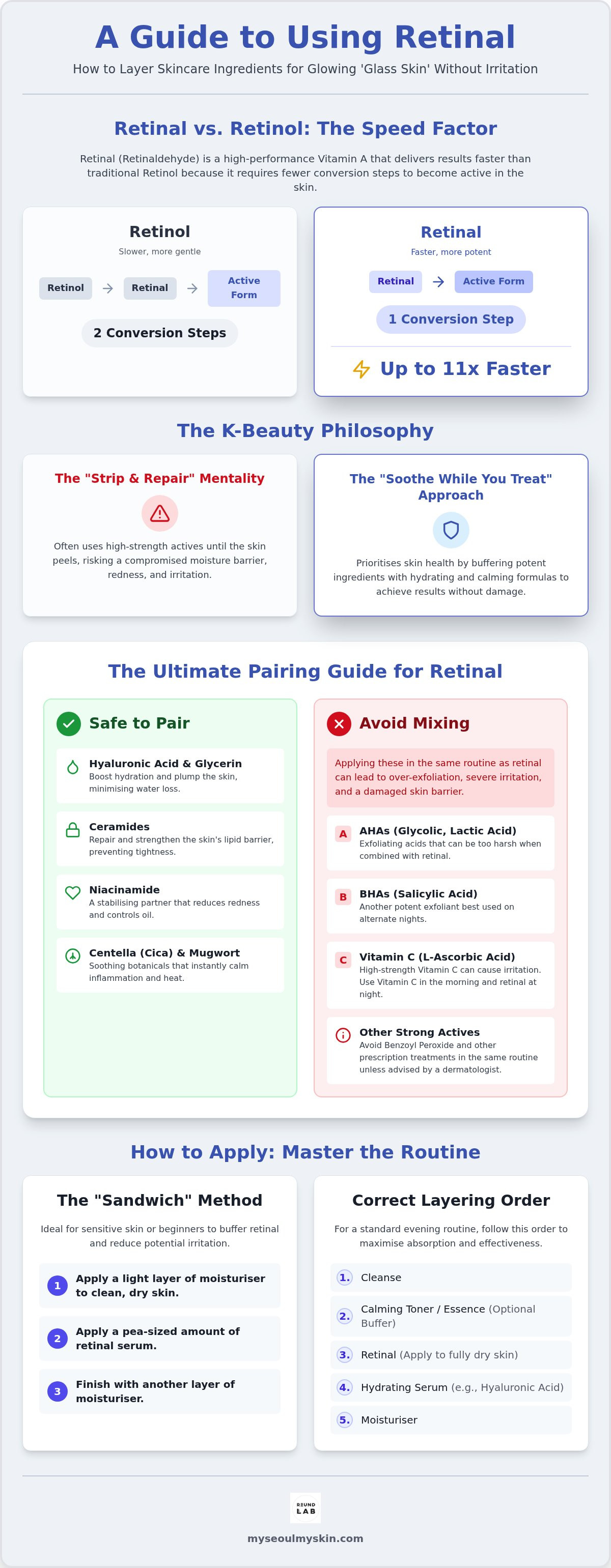
Retinaldehyde, commonly known as retinal, is the high-performance powerhouse of the Vitamin A family. It sits in a unique position within the skincare hierarchy, offering results that far outpace traditional retinol. Whilst retinol requires two conversion steps to become active retinoic acid, retinal only needs one. This direct path makes it incredibly efficient at boosting cell turnover and collagen production. However, this increased potency means your application technique must be precise. Understanding What Can You Use With Retinal? A Guide to Mixing Skincare Ingredients is essential for anyone looking to upgrade their evening regimen without risking irritation.
Introducing retinal into a complex routine often leads to common pitfalls. Many users mistakenly apply it alongside other aggressive actives, which can disrupt the skin's delicate pH balance. A compromised lipid barrier is often the result of incorrect mixing, leading to the dreaded "retinol purge" or persistent redness. Success with this ingredient relies on maintaining barrier integrity through thoughtful product pairings and a patient approach to building tolerance.
Retinal vs Retinol: The Speed Factor
The efficiency of retinal comes down to its one-step conversion process. Because it bypasses the extra metabolic stage required by retinol, it can deliver visible improvements to skin texture and tone up to 11 times faster. Retinal is the bridge between over-the-counter retinol and prescription-strength Tretinoin. This speed is a double-edged sword; the active works harder, so your layering order becomes more critical than ever. Applying it to damp skin or mixing it with the wrong acids can accelerate penetration too quickly, causing the skin to feel overwhelmed and sensitive.
The K-Beauty Approach to Actives
Western skincare often adopts a "strip and repair" mentality, where high-strength acids are used until the skin visibly peels. The Korean philosophy, which we curate at My Seoul My Skin, prioritises a "soothe-while-you-treat" approach. This involves "buffering" your actives with hydrating essences or ceramides to create a safety net for your skin. British skin is particularly susceptible to environmental stressors like biting winds and indoor heating, which can exacerbate dryness. By adopting this gentler K-beauty method, you can enjoy the transformative benefits of retinal whilst keeping your complexion calm, plump, and deeply hydrated.
The Perfect Partners: Ingredients That Boost Retinal Results
Success with retinal isn't about using the highest concentration possible. It's about building a supportive environment that allows the active to work without causing chaos. When you ask What Can You Use With Retinal? A Guide to Mixing Skincare Ingredients, the answer always begins with hydration and barrier repair. Ingredients like Hyaluronic Acid and Glycerin act as moisture magnets. They help to minimise trans-epidermal water loss, ensuring your skin remains plump and resilient whilst the retinal works its magic in the deeper layers.
Ceramides and Niacinamide are equally essential for maintaining a healthy glow. Whilst retinal promotes rapid cell turnover, Ceramides step in to repair the lipid barrier, essentially patching any "gaps" in your skin's natural shield. This prevents that tight, uncomfortable feeling that often follows Vitamin A use. Niacinamide serves as a stabilising partner, expertly reducing the redness and flushing often associated with potent retinoids. It also helps to control oil production, making it an excellent choice for those targeting both ageing and congestion.
Centella and Mugwort: The Soothing Superstars
In the K-beauty world, Centella Asiatica (Cica) and Mugwort are the ultimate "security guards" for your skin barrier. Abib skincare UK specialises in using Heartleaf and Centella to instantly calm inflammation and heat. These ingredients are essential if you have reactive skin and are just starting your retinal journey. Applying a calming essence or toner before your retinal can make all the difference. These botanical extracts soothe the skin on contact, providing a cooling sensation that offsets any potential irritation from the treatment step.
The Rise of PDRN and Retinal Synergy
Looking toward the future of anti-ageing, the combination of PDRN (Polydeoxyribonucleotide) and retinal is emerging as the gold standard for 2026. PDRN supports deep skin regeneration and cellular repair, perfectly complementing the resurfacing power of retinal. VT Cosmetics UK has pioneered these innovations, offering advanced formulas that target fine lines whilst maintaining a healthy, bouncy complexion. This synergy ensures you achieve that coveted glass-skin finish without the typical downtime or peeling. When considering What Can You Use With Retinal? A Guide to Mixing Skincare Ingredients, this high-tech pairing is a top recommendation for transformative results. Ready to build your routine? You can explore our curated selection of barrier-boosting essentials to find your perfect match.
The Red Flags: Ingredients to Avoid Mixing with Retinal
Maximalism is a common mistake in skincare. You might think layering every active in your cabinet will speed up your glass-skin journey. It won't. In fact, knowing What Can You Use With Retinal? A Guide to Mixing Skincare Ingredients is as much about what to leave out as what to include. Combining too many aggressive ingredients leads to over-exfoliation. This leaves your skin raw, shiny, and unable to protect itself from environmental pollutants.
AHAs like Glycolic or Lactic Acid and BHAs such as Salicylic Acid are the primary culprits. These ingredients work on the skin's surface or inside the pores to remove dead cells. Retinal also accelerates cell turnover. When used together in the same evening session, they strip the barrier too aggressively. Avoid using high-strength Benzoyl Peroxide alongside your retinal. Benzoyl Peroxide can actually oxidise retinal, rendering your expensive serum completely ineffective whilst causing extreme dryness. Similarly, don't be tempted to use multiple retinoids at once. It doesn't double your results; it only doubles the risk of a reaction.
Exfoliating Acids: A Recipe for Sensitivity
Chemical exfoliants become redundant when your retinal is already working hard to renew your complexion. Using them simultaneously is a recipe for disaster. This often leads to a compromised skin barrier that users mistake for a "purge." Instead, try a "Skin Cycling" schedule. This involves using your acids on one night, your retinal on the next, and then dedicating two nights to pure recovery. Mixing Salicylic Acid and Retinal can lead to chronic dryness and 'retinoid dermatitis'. This approach keeps your skin clear without the constant irritation. It ensures your barrier stays intact whilst you still reap the benefits of both ingredients over the course of a week.
The Vitamin C Conflict
The debate around Vitamin C and retinal often centres on pH levels. Pure Vitamin C (L-Ascorbic Acid) requires a very low, acidic pH to be effective. Retinal performs best at a more neutral level. Applying them together can render both products less effective or cause unnecessary stinging. Stick to the "Vitamin C in the AM, Retinal in the PM" rule for maximum efficacy. This allows the Vitamin C to provide antioxidant protection against free radicals during the day whilst the retinal repairs your skin at night. If you insist on a complex morning routine, consider using a gentle Vitamin C derivative. These are often more stable, less acidic, and much friendlier to a skin barrier that is still adjusting to a new retinal habit.
Master the Routine: Layering Order and the Sandwich Method
Applying your products in the correct sequence is just as vital as the ingredients themselves. In the world of K-beauty, we always follow the "thinnest to thickest" rule. This ensures that lightweight, watery formulas like essences can penetrate the skin before heavier creams create a seal. When figuring out What Can You Use With Retinal? A Guide to Mixing Skincare Ingredients, remember that retinal is a treatment step. It usually sits right in the middle of your routine, after your toner but before your final moisturiser.
Consistency is key, but so is protection. Retinal increases your skin's sensitivity to the sun by accelerating cell turnover. This makes applying a broad-spectrum SPF 50 the following morning a non-negotiable step. Without it, you risk undoing all your hard work and inviting sun damage or hyperpigmentation. Think of sunscreen as the final insurance policy for your radiant results.
Step-by-Step: The Retinal Sandwich
If you have sensitive skin or are a total beginner, the "sandwich method" is your new best friend. This technique creates a buffer that slows down the absorption of the active ingredient, significantly reducing the risk of peeling. Follow these three simple steps:
- Layer 1: Apply a thin layer of a basic, fragrance-free moisturiser or a hydrating essence to clean skin.
- Layer 2: Apply a pea-sized amount of your retinal serum once the first layer has settled.
- Layer 3: Seal everything in with a thicker barrier cream to lock in moisture.
This method doesn't make the retinal less effective. Instead, it ensures the active is delivered more gently. It's the perfect way to build tolerance whilst maintaining a healthy, comfortable complexion. By creating this moisture barrier, you prevent the retinal from hitting the skin too hard, which is the primary cause of early-stage irritation.
Timing Your Routine for Maximum Glow
There is a common myth that you must wait 20 minutes after washing your face before applying retinal. Whilst applying actives to damp skin can increase penetration and irritation, you only need to wait until your skin feels dry to the touch. You can easily integrate this into a wider Korean glass skin routine by focusing on deep hydration first. For beginners, we recommend the 1-2-3 rule: use retinal once a week for the first week, twice for the second, and three times for the third. This gradual introduction prevents the skin from becoming overwhelmed. Ready to start your journey? Shop our specialised K-beauty retinal collection to find the perfect formula for your skin type.
Your Curated K-Beauty Retinal Strategy for 2026
Mastering your routine requires a long-term perspective. Think of retinal as a marathon, not a sprint. Consistency always beats intensity. To help you navigate your journey, we've simplified the process using the Numbuzin UK numbering system. This clever method makes it easy to identify which products support your specific goals. When you understand What Can You Use With Retinal? A Guide to Mixing Skincare Ingredients, you can build a routine that delivers professional results from home.
Shopping for your K-beauty essentials should be as stress-free as your evening routine. At My Seoul My Skin, we act as your trusted bridge to Korea's latest innovations. Our stock comes directly from Seoul, ensuring total authenticity. You'll never have to worry about customs delays or surprise fees. Plus, we offer free UK delivery on orders over £20, making it easier than ever to maintain your glow whilst accessing the best products on the market.
The 'Brighten and Firm' Bundle
For those targeting stubborn dark spots and fine lines, pairing retinal with Niacinamide is a game-changer. Our favourite 'Power Pair' involves using Numbuzin No. 5+ pads alongside your retinal treatment. These pads are packed with brightening agents that prepare the skin beautifully. This duo works in harmony to even out skin tone whilst the retinal firms the complexion. For a deeper look at how to structure your regimen, check out our Korean skincare UK guide. It provides broader context for achieving that elusive glass-skin finish without the guesswork.
The 'Sensitive Skin' Strategy
If your skin is prone to redness, a minimalist approach is best. Focus on high-quality formulas from epii or Dr.Jart+ treatments that feature encapsulated retinal for slower release. Pair these with the calming power of Abib's Heartleaf line to keep irritation at bay. This combination ensures you get the anti-ageing benefits without overwhelming your barrier. Sometimes, less truly is more. A simple, well-chosen routine often yields better results than a ten-step process that causes irritation. Ready to transform your skin? Shop our curated Retinal Collection at My Seoul My Skin today and start your journey to a radiant complexion.
Unlock Your Most Radiant Complexion Yet
Achieving a glowing glass-skin finish is entirely possible when you treat your barrier with respect. By embracing the "soothe-while-you-treat" philosophy, you can enjoy the transformative benefits of retinal without the fear of redness or peeling. Remember to keep your routine simple; focus on hydration first and save your exfoliating acids for non-retinal nights to avoid over-stressing your skin. This What Can You Use With Retinal? A Guide to Mixing Skincare Ingredients has equipped you with the confidence to layer like a pro.
We've curated a selection of authentic K-beauty essentials sourced directly from Seoul to help you build a routine that truly works for British skin. With free UK delivery on orders over £20, it's never been easier to access these high-performance innovations. Discover our expert-curated Retinal and Vitamin A collection at My Seoul My Skin and start your journey toward a smoother, healthier glow today. Your dedicated regimen is the key to lasting results.
Frequently Asked Questions
Can I use Niacinamide with retinal?
Yes, Niacinamide is one of the best ingredients to pair with your retinal treatment. It works as a stabilising partner that helps to calm redness and strengthen the skin barrier whilst the retinal promotes cell turnover. Many Numbuzin products utilise this combination to deliver brighter skin without the sting. It's a perfect choice for those wondering What Can You Use With Retinal? A Guide to Mixing Skincare Ingredients often highlights this duo as a gold standard.
Is it safe to use Hyaluronic Acid and retinal together?
Absolutely, this is a highly recommended pairing for maintaining a healthy glow. Hyaluronic Acid acts as a moisture magnet that helps to minimise trans-epidermal water loss, which is a common side effect of Vitamin A. By keeping the skin deeply hydrated, you reduce the risk of peeling and discomfort. Apply your Hyaluronic Acid serum first on slightly damp skin, wait for it to settle, then follow with your retinal treatment.
Can I use my retinal serum every night?
You shouldn't start using retinal every night immediately. Most skin types need a gradual introduction to build tolerance. We recommend the 1-2-3 rule: use it once a week for the first week, twice for the second, and three times for the third. Only move to nightly application once your skin shows no signs of redness or irritation. Patience is key to achieving that glass-skin finish without damaging your moisture barrier.
Should I apply retinal to damp or dry skin?
Always apply retinal to completely dry skin to avoid unnecessary irritation. Applying active ingredients to damp skin can cause them to absorb too quickly and deeply, which often leads to stinging or a compromised barrier. After cleansing and using your toners or essences, wait a few minutes until your face feels dry to the touch before applying your pea-sized amount of retinal. This simple step keeps your routine safe and effective.
Can I mix retinal with my moisturiser in my hand?
Mixing retinal with your moisturiser is a valid way to "buffer" the active, but layering is usually more effective. Whilst mixing in your hand can make application gentler, it can lead to an uneven distribution. Our guide on What Can You Use With Retinal? A Guide to Mixing Skincare Ingredients recommends the "sandwich method" instead. Apply moisturiser first, then retinal, then more cream to ensure your face is protected and the active is evenly spread.
What happens if I use AHA/BHA and retinal on the same night?
Using AHA or BHA acids alongside retinal on the same evening often leads to over-exfoliation and chronic dryness. This combination strips the skin's natural oils too aggressively, resulting in a shiny, raw appearance or "retinoid dermatitis." Your skin barrier becomes compromised, making it susceptible to bacteria and environmental damage. It's much safer to use your chemical exfoliants on separate nights to keep your complexion resilient, calm, and healthy over the long term.
Does retinal cause sun sensitivity?
Yes, retinal increases sun sensitivity by accelerating the rate at which new skin cells reach the surface. These fresh cells are more vulnerable to UV damage and hyperpigmentation. This makes applying a broad-spectrum SPF 50 every morning a non-negotiable part of your routine. Even on cloudy days in the UK, the sun's rays can undo the hard work of your evening treatment. Protecting your skin is the final step in any successful regimen.
Can I use retinal under my eyes for dark circles?
You can use retinal under your eyes, but you must be extremely cautious. The skin in this area is much thinner and more delicate than the rest of your face. Use a very small amount and consider applying a "buffer" layer of eye cream first. If you experience any stinging or persistent redness, stop immediately. Many K-beauty brands like Dr.Jart+ offer specialised treatments that are better suited for this sensitive and expressive zone.