

What if the very products meant to save your skin are actually the ones causing that persistent redness and stinging? It is a common struggle for many beauty enthusiasts who find themselves trapped in a cycle of irritation and confusion. You have likely noticed that your favourite serums now cause a prickly sensation; perhaps your face even feels oily yet uncomfortably tight at the same time. This happens when your protective shield is compromised, allowing moisture to escape whilst irritants move in.
We understand how exhausting it feels to second-guess every ingredient in your bathroom cabinet. You deserve a routine that works without the drama. In this guide, you will learn the Seven Signs Your Skin Barrier Is Damaged: and How to Simplify Your Routine to restore your natural balance. We are going to explore the K-Beauty philosophy of skip-care, moving away from complex layers toward a minimalist, moisture-first approach. From identifying hidden red flags to selecting soothing ceramides, you are about to master a streamlined regimen that finally delivers a calm, comfortable, and radiant complexion. Let's get your glow back on track with a plan that prioritises healing over hype.
Key Takeaways
- Understand why your skin barrier acts as a vital shield to keep moisture in and harmful pathogens out.
- Learn to recognise the Seven Signs Your Skin Barrier Is Damaged: and How to Simplify Your Routine to end persistent stinging and redness.
- Identify the common skincare mistakes, such as over-using harsh cleansers or stacking too many actives, that disrupt your natural balance.
- Master the K-Beauty 'skip-care' method to reset your complexion by pausing irritants and focusing on gentle, pH-balanced hydration.
- Discover how traditional Korean ingredients like Centella Asiatica and fermented extracts can help rebuild a resilient, healthy glow.
What Exactly is a Skin Barrier and Why Does it Matter?
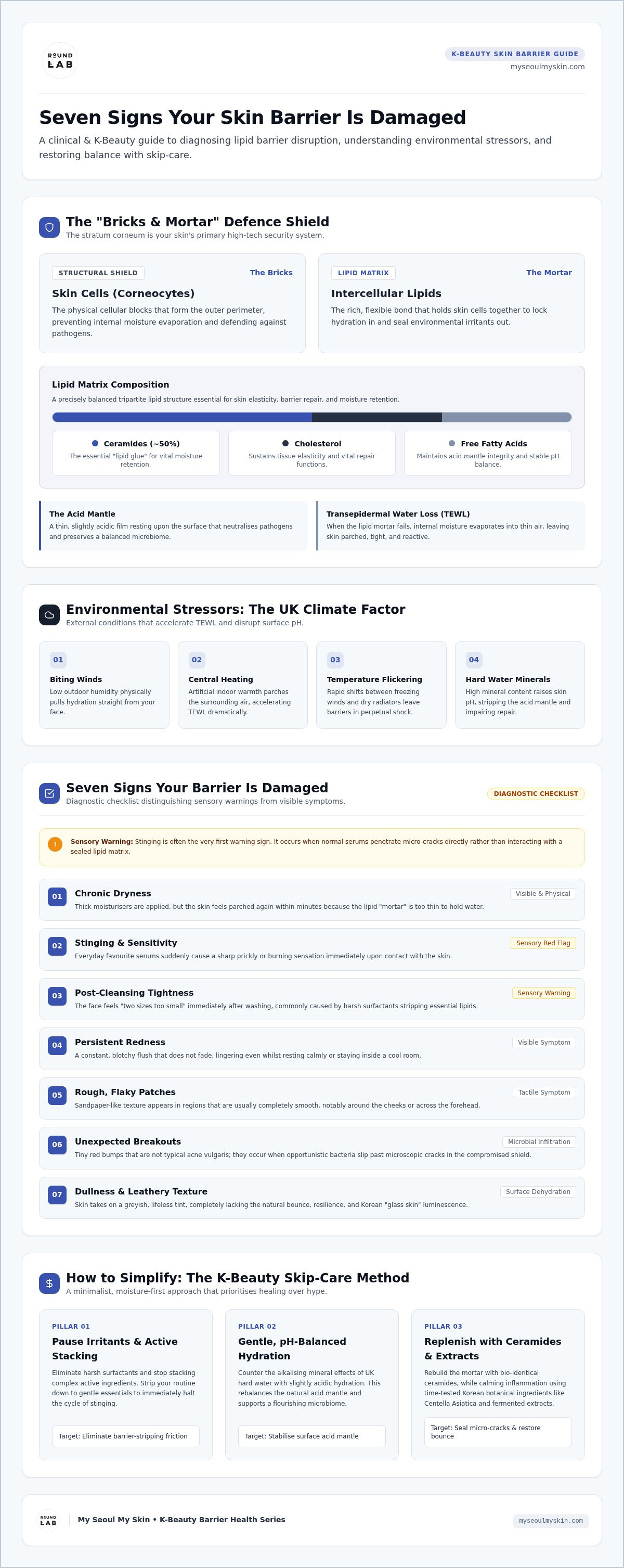
Think of your skin as a high-tech security system. The outermost layer, scientifically known as the stratum corneum, serves as your body's primary "bricks and mortar" shield. In this analogy, your skin cells are the bricks, whilst a rich blend of lipids acts as the mortar holding everything together. This structure is your first line of defence against the outside world. It ensures that essential moisture stays trapped inside and environmental irritants remain firmly out. Without a functional barrier, achieving that coveted Korean "glass skin" radiance is impossible.
A vital part of this system is the acid mantle. This thin, slightly acidic film sits on the skin's surface to neutralise pathogens and maintain a healthy microbiome. When this shield weakens, you encounter Transepidermal Water Loss (TEWL). This is a fancy way of saying your internal hydration is evaporating into thin air. Learning to spot the Seven Signs Your Skin Barrier Is Damaged—and How to Simplify Your Routine is the first step toward reclaiming a comfortable, glowing complexion.
The Anatomy of Your Skin's Defence System
Your barrier relies on a specific lipid matrix to stay resilient. This matrix is composed of three key components:
- Ceramides: These make up about 50% of the lipid glue and are essential for moisture retention.
- Cholesterol: This helps maintain the skin's elasticity and repair functions.
- Free Fatty Acids: These support the acid mantle and keep the skin's pH balance stable.
When these lipids are in balance, your skin feels soft and plump. If they are stripped away, your internal hydration levels plummet, leading to that tell-tale feeling of tightness that no amount of heavy cream seems to fix.
Why the UK Climate Challenges Your Barrier
Living in the UK presents unique hurdles for your skin. During the colder months, biting winds and low humidity levels physically pull moisture from your face. Once you step indoors, central heating further parches the air, accelerating TEWL. This constant temperature flickering can leave your barrier in a state of perpetual shock.
Many regions across the UK also suffer from hard water. The high mineral content in hard water can raise your skin's pH, disrupting the acid mantle and making it harder for your "mortar" to repair itself. Adapting your K-Beauty regimen to include seasonal adjustments is not just a luxury; it is a necessity for maintaining a healthy glow year-round. By focusing on gentle, protective layers, you can shield your complexion from these environmental stressors.
Seven Signs Your Skin Barrier is Damaged: A Checklist
Identifying the source of your skin's distress is the first step toward a healthy glow. If your usual products suddenly feel like they are attacking your face, you are likely experiencing several signs your skin barrier is damaged. This checklist helps you pinpoint exactly what is going wrong so you can take action quickly. Use these markers to assess your current complexion health.
- Chronic Dryness: You apply thick moisturisers, but your skin feels parched again within minutes. This happens when the lipid "mortar" is too thin to hold water.
- Stinging and Sensitivity: Products that used to be your favourites now cause a prickly or burning sensation upon application.
- Post-Cleansing Tightness: Your face feels two sizes too small after washing. This is often caused by harsh surfactants stripping your natural oils.
- Persistent Redness: A constant, blotchy flush that does not fade, even when you are resting or in a cool environment.
- Rough, Flaky Patches: You notice a sandpaper-like texture in areas that are usually smooth, such as the cheeks or forehead.
- Unexpected Breakouts: Tiny, red bumps that aren't typical acne; these are often a result of bacteria entering through micro-cracks in the barrier.
- Dullness: A "greyish" or leathery look that lacks the typical vibrancy and bounce of healthy skin.
Recognising these Seven Signs Your Skin Barrier Is Damaged—and How to Simplify Your Routine—is essential for long-term health. If you are seeing these symptoms, it's time to browse our curated K-Beauty essentials designed to soothe and repair without causing further irritation.
Sensory vs. Visible Symptoms
Stinging is often the very first warning sign. It usually happens long before you see any visible redness or flaking. This sensory reaction occurs because your nerve endings are more exposed to the environment. If your skin feels reactive but looks normal, don't ignore it. Differentiating between naturally sensitive skin and a temporary damaged barrier is key; sensitivity is a lifelong trait, whilst a damaged barrier is a temporary state caused by external factors. You can perform a simple patch test on your jawline with new products to check for immediate reactivity before applying them to your whole face.
When to Seek Professional Advice
Most barrier issues resolve with a simple "skip-care" reset. However, if you notice yellow crusting, extreme swelling, or pus-filled blisters, you might have an infection. A broken barrier allows pathogens in, which can lead to impetigo or severe dermatitis. If your skin does not improve after two weeks of pausing all actives, it is best to see a GP or dermatologist. They can help differentiate between a simple damaged barrier and a true allergic reaction to a specific ingredient, ensuring you receive the correct treatment.
Common Culprits: Why Your Current Routine Might Be the Problem
Modern skincare culture often pushes the idea that more is always better. We stack serums like trophies, hoping a higher percentage of acids will lead to faster results. However, this "maximalist" approach frequently triggers the very irritation you are trying to soothe. When you understand the Seven Signs Your Skin Barrier Is Damaged—and How to Simplify Your Routine, you begin to see that your bathroom cabinet might be the primary source of your skin's distress.
Harsh foaming cleansers are one of the most frequent offenders. They often contain aggressive surfactants that strip away the natural oils and lipids your skin needs to stay plump. If your face feels squeaky clean or tight after washing, you have likely just washed away your protective shield. This leaves your complexion vulnerable to environmental stressors like pollution and UV damage, creating what many call the "London skin" effect: a dull, congested, and reactive appearance driven by urban oxidative stress.
The 'Actives' Trap: Too Much of a Good Thing
Mixing high-strength Vitamin C, Retinoids, and AHAs in a single evening is a recipe for disaster. Whilst these ingredients offer incredible benefits, high-percentage serums can easily overwhelm your skin's delicate repair mechanisms. Your cells simply cannot keep up with the constant cycle of shedding and renewal. Over-exfoliation stands as the #1 cause of barrier damage in 2026. If you are currently in the "danger zone," you must avoid these potent actives entirely until your barrier feels resilient again. Focus on restoration rather than transformation for at least one full skin cycle.
Physical vs. Chemical Stressors
It isn't just the ingredients in your bottles that cause trouble; your habits matter too. Using piping hot water or scrubbing with a rough face cloth creates micro-tears that compromise your skin's integrity. These physical stressors make it easier for chemical irritants, such as synthetic fragrance and essential oils, to penetrate deeper and cause inflammation. Even your lifestyle plays a role. Internal factors like chronic stress and a lack of sleep manifest as increased skin sensitivity, making your barrier even more susceptible to external damage.
To fix the issue, you must look at your regimen as a whole. Are you using too many products from different brands that weren't designed to work together? This "cocktailing" often leads to ingredient clashes that your skin simply cannot handle. Simplifying your routine isn't about giving up on results; it's about giving your skin the space it needs to heal itself from the inside out.
How to Simplify Your Routine: The K-Beauty Recovery Plan
Once you have identified the Seven Signs Your Skin Barrier Is Damaged—and How to Simplify Your Routine, it is time to pivot toward a healing mindset. Recovery is not about adding more products to your shelf; it is about choosing the right ones to support your skin's natural repair process. This K-Beauty recovery plan focuses on curated subtraction and lipid replenishment to restore your glow.
Step 1: The Great Reset. Immediately pause all chemical exfoliants, retinoids, and high-strength Vitamin C serums. Your skin needs a "holiday" from actives for two to four weeks to lower inflammation. Step 2: Gentle Cleansing. Switch to a pH-balanced oil or milk cleanser. These formulas lift away debris whilst leaving your lipid matrix intact. Step 3: Hydration Layering. Focus on watery essences containing humectants like Hyaluronic Acid and Panthenol (Provitamin B5). These ingredients pull moisture into the skin without causing a sting. Step 4: Seal and Protect. Use a ceramide-rich cream to act as a temporary shield whilst your own barrier rebuilds. Step 5: Minimalist SPF. UV rays are a major stressor for compromised skin. Choose a gentle, mineral-based sunscreen for daily protection that won't irritate sensitive patches.
The 'Skip-Care' Philosophy Explained
Skip-care is the Korean answer to skincare burnout. It involves identifying which products are truly essential and which are merely "extras" that add unnecessary friction to your face. By opting for multi-functional products, such as a hydrating toner that also contains soothing ferments, you reduce the number of times you physically touch and rub your skin. This minimalist approach is exactly why Korean skincare UK enthusiasts are moving away from the famous 10-step routine. It is about high-performance simplicity that respects your skin's delicate balance.
The 28-Day Skin Cycle
Patience is your most powerful tool during this phase. The biological epidermal turnover timeline averages 28 days in young adults, though this can extend to 45 or 60 days as we mature. You must commit to your simplified routine for at least one full cycle to see a visible transformation. Healing feels like a gradual reduction in stinging and looks like the return of a soft, plump texture. Only when your skin feels consistently comfortable should you slowly reintroduce one active ingredient at a time. If you are ready to begin your reset, shop our barrier-safe K-Beauty essentials to find your perfect minimalist match.
Rebuilding with Resilience: Curated K-Beauty Favourites for Repair
After you have mastered the Seven Signs Your Skin Barrier Is Damaged—and How to Simplify Your Routine, the next step is choosing the right tools for the job. K-Beauty excels in this area by blending ancient botanical wisdom with modern lipid science. Whilst many Western clinical brands focus solely on synthetic ceramides, Korean solutions introduce soothing powerhouses like Centella Asiatica and Mugwort. These ingredients don't just sit on the surface. They actively calm the "fire" of inflammation whilst your skin works to rebuild its internal structures.
Fermented ingredients are another K-Beauty secret for microbiome health. These bio-available extracts help restore the beneficial bacteria on your skin's surface. This creates a stronger environment for your acid mantle to thrive, ensuring long-term resilience against the UK's harsh elements. By focusing on these gentle yet effective ingredients, you can move away from the "more is better" trap and embrace a regimen that prioritises healing over harshness.
Soothing Stars: Centella and Heartleaf
Abib skincare UK embodies the "less is more" aesthetic perfectly. Their formulas are designed for those with angry, reactive complexions who need immediate relief. Heartleaf is their secret weapon. It is incredibly effective at reducing redness and heat without the heavy, greasy feel of traditional barrier creams. For compromised skin, fast-absorbing and non-sticky textures are vital. They allow you to hydrate your face without the need for excessive rubbing, which can further irritate delicate patches.
The Ceramide Connection in K-Beauty
When you need a structured approach, Numbuzin UK makes the selection process effortless. They organise their range by numbers, allowing you to find targeted barrier support without any guesswork. Look for their formulations rich in Panthenol and Madecassoside. These ingredients work in tandem with ceramides to accelerate skin healing and lock in vital moisture. It is a methodical way to ensure you are giving your skin exactly what it needs during its 28-day renewal cycle. Recovery is a journey, but with the right curation, it is one that leads to a healthier, more radiant you.
Ready to transform your routine and restore your glow? Shop our curated Barrier Repair collection at My Seoul My Skin to find authentic, Seoul-sourced solutions that actually work for your unique needs.
Embrace the Path to a Calmer Complexion
Restoring a compromised barrier is a journey of patience and curated care. By recognising the Seven Signs Your Skin Barrier Is Damaged—and How to Simplify Your Routine, you have already taken the most important step toward healing. Remember to pause those potent actives, embrace the "skip-care" philosophy, and allow your skin at least 28 days to renew itself. Focus on soothing botanicals like Centella and essential lipids to rebuild your natural shield from the inside out.
At My Seoul My Skin, we act as your trusted bridge to authentic Korean solutions. Our team has carefully selected products for sensitive and damaged skin to ensure your recovery is both simple and effective. Every item is 100% authentic and sourced directly from Seoul. Plus, you can enjoy free UK delivery on orders over £20 as you begin your transformation.
Discover Authentic K-Beauty Essentials for Barrier Repair at My Seoul My Skin
Your journey to a healthy, resilient glow starts with a single, gentle step. You don't have to navigate this alone; we are here to help you find the balance your skin deserves.
Frequently Asked Questions
How long does it take to fix a damaged skin barrier?
It typically takes a minimum of two to four weeks of zero active irritants for initial repair to occur. However, because a full cellular renewal cycle averages 28 days in young adults and can extend to 60 days in mature skin, you should commit to a simplified routine for at least one month. Consistency is key during this period to allow your lipid matrix to reorganise and strengthen without further disruption.
Can I still use Vitamin C if my skin barrier is damaged?
You should pause all high-strength Vitamin C serums whilst your skin is healing. L-ascorbic acid is often formulated at a low pH, which can further irritate an already compromised acid mantle and cause stinging. Once you have identified the Seven Signs Your Skin Barrier Is Damaged—and How to Simplify Your Routine, focus on soothing humectants instead. You can slowly reintroduce Vitamin C once your complexion feels comfortable and resilient again.
Is double cleansing bad for a compromised skin barrier?
Double cleansing is not inherently bad, but you must choose your formulas carefully. Avoid harsh, high-pH foaming cleansers that strip your natural oils. Instead, use a gentle cleansing oil followed by a sub-acidic milk or gel cleanser. This method effectively removes sunscreen and debris without disrupting your lipids. If your skin feels exceptionally tight or reactive, you might prefer using just a single, non-stripping milk cleanser until the initial inflammation subsides.
What is the 'Retinal Sandwich Method' and can it help?
The 'Retinal Sandwich Method' involves applying a layer of moisturiser before and after your retinal treatment to buffer the active ingredient. Whilst this is an excellent strategy for preventing future damage, you should avoid all retinoids during the acute healing phase. Once your barrier is restored, this method helps you reintroduce renewal ingredients without overwhelming your skin. It acts as a protective cushion that minimises the risk of dryness and peeling during your K-Beauty journey.
Does a damaged skin barrier cause acne or just dryness?
A compromised barrier can cause both chronic dryness and unexpected breakouts. When your protective shield is weak, moisture evaporates, leading to dehydration. Simultaneously, micro-cracks in the stratum corneum allow bacteria and environmental pollutants to enter the skin, which often triggers inflammation and tiny, irritated bumps. This is why many people experience "rebound oiliness" where the skin overproduces sebum to compensate for the lack of hydration, leading to a confusing mix of flakes and spots.
Can I use VT Reedle Shot whilst my barrier is healing?
You should avoid using VT Reedle Shot whilst your skin is actively healing. This product uses physical micro-needles to enhance ingredient penetration, which is too intense for a compromised complexion. Using it on an irritated barrier can exacerbate redness and stinging. Wait until your skin feels calm and the Seven Signs Your Skin Barrier Is Damaged—and How to Simplify Your Routine have fully resolved before reintroducing this advanced treatment to your regimen for the best results.
What are the best ingredients to look for in a K-Beauty barrier cream?
Look for a physiological triple-lipid complex containing ceramides, cholesterol, and free fatty acids. These ingredients mimic your skin's natural "mortar" to seal in moisture. Additionally, K-Beauty favourites like Panthenol, Madecassoside, and Centella Asiatica are exceptional for accelerating the healing process. These soothing botanicals calm inflammation whilst humectants like Glycerin pull water into the deeper layers. Choosing a fragrance-free formula from brands like Abib or Numbuzin ensures maximum recovery with zero irritation.
Is hard water in the UK making my skin barrier worse?
Hard water is a significant factor for many in the UK, as high mineral content can raise your skin's pH levels. This disruption weakens the acid mantle and makes it harder for your barrier to maintain its protective function. To combat this, always follow your cleanse with a pH-balanced toner or essence. This helps neutralise the effects of tap water and ensures your skin remains in the optimal acidic range for repair and long-term health.