

The harshest physical scrub in your bathroom cabinet might actually be the culprit behind your rough, uneven texture. If you've been battling persistent dullness, choosing the right face exfoliator shouldn't feel like a high-stakes gamble with your moisture barrier. We've all been there: you chase an enviable glass-skin glow, only to end up with tight, inflamed redness and flaking skin after an overly aggressive resurfacing session.
Sorting through surface-smoothing AHAs, pore-clearing BHAs, and barrier-friendly PHAs can quickly become confusing when your complexion feels both sensitive and congested. True skin refinement doesn't require stripping your face raw. Discover how to choose the perfect face exfoliator to refine texture and boost radiance without stripping your skin barrier. Ahead, we decode whether your skin type thrives best with gentle liquid acids, soothing enzymes, or modern spicule textures, setting you up with a balanced weekly routine for a calm, luminous complexion with visibly blurred pores.
Key Takeaways
- Understand how liquid acids, fruit enzymes, and micro-spicules dissolve dull surface buildup without the abrasive micro-tears caused by aggressive scrubs.
- Discover how to match the right face exfoliator to your specific skin profile, selecting BHAs for pore clarity or gentle PHAs for reactive complexions.
- Learn why the Korean barrier-first philosophy favours consistent, hydrating resurfacing over high-percentage peels that risk redness and flaking.
- Master the ideal weekly cadence to slot exfoliating toners and pre-soaked pads seamlessly into your double-cleansing regimen.
- Uncover how authentic Seoul formulations help you achieve a smooth, light-reflective glass-skin finish whilst keeping your moisture barrier intact.
Understanding Face Exfoliation: Physical, Chemical, and Spicule Formulations
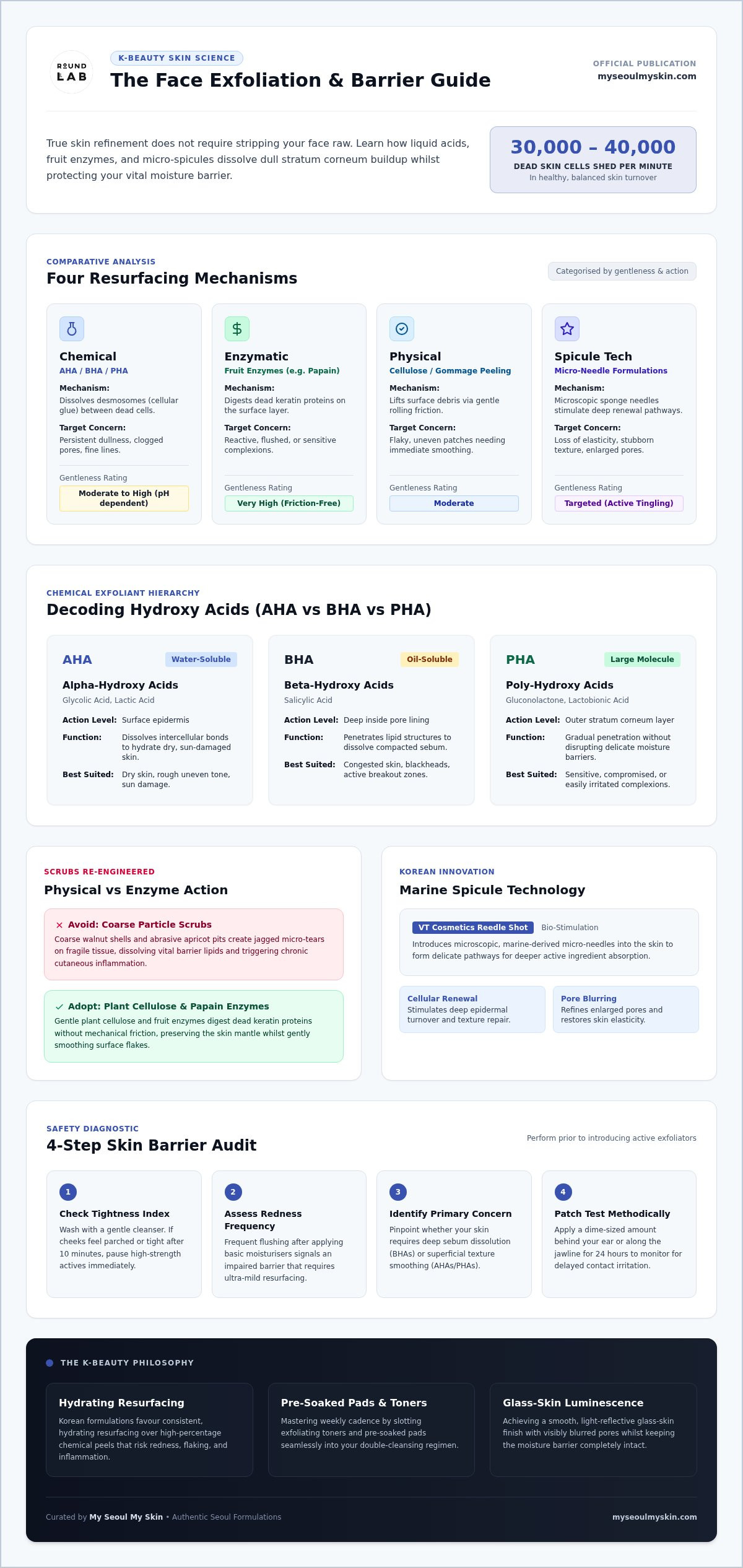
At its core, epidermal skin shedding is an essential biological cycle. Healthy skin sheds roughly 30,000 to 40,000 dead cells every minute. When cellular turnover slows down due to age, environmental stress, or dry weather, dead keratinocytes accumulate on the stratum corneum. The right cosmetic exfoliation protocol sweeps away this dull cellular layer, instantly boosting light reflection and accelerating cellular renewal.
Choosing an inappropriate formula, however, triggers chronic cutaneous inflammation. Rough manual particles scratch fragile tissue, while unbuffered high-percentage acids dissolve vital lipids. Modern skincare divides your options into three distinct mechanisms: mechanical friction, chemical dissolution, and micro-channel bio-stimulation.
| Exfoliator Category | Primary Mechanism | Ideal Skin Concern | Gentleness Rating |
|---|---|---|---|
| Chemical (AHA/BHA/PHA) | Dissolves desmosomes (cellular glue) | Persistent dullness, clogged pores, fine lines | Moderate to High (pH dependent) |
| Enzymatic | Digests dead keratin proteins on the surface | Reactive, flushed, or sensitive skin | Very High |
| Physical (Cellulose/Gommage) | Lifts surface debris via gentle friction | Flaky, uneven patches needing quick smoothing | Moderate |
| Spicule Formulations | Microscopic sponge needles stimulate deep renewal | Loss of elasticity, stubborn texture, enlarged pores | Targeted (Active tingling) |
Chemical Exfoliants: The Differences Between AHAs, BHAs, and PHAs
Chemical solutions utilise mild acids to release dead cells without mechanical scrubbing. Water-soluble Alpha-Hydroxy Acids (AHAs), such as glycolic and lactic acid, dissolve intercellular bonds on the surface to hydrate dry, sun-damaged skin. In contrast, oil-soluble Beta-Hydroxy Acids (BHAs), specifically salicylic acid, penetrate deep into the pore lining to clear compacted sebum. Poly-Hydroxy Acids (PHAs) feature a larger molecular structure. Because they penetrate gradually, PHAs resurface the epidermis without disrupting compromised moisture barriers.
Physical and Enzymatic Scrubs vs Spicule Technology
Traditional physical scrubs deserve a modern rethink. Coarse walnut shells and abrasive apricot pits create jagged micro-tears that compromise barrier lipids. Replace them with gentle plant cellulose or enzymatic exfoliants. Fruit enzymes like papain break down dead proteins without any friction at all.
For high-performance textural repair, Korean skincare pioneers spicule technology. Formulations such as VT Cosmetics UK Reedle Shot introduce microscopic, marine-derived micro-needles into the skin. These uniform spicules create delicate pathways that stimulate skin renewal and boost active ingredient delivery. Selecting your ideal face exfoliator format simply means matching your skin's tolerance to the right resurfacing method.
How to Choose the Best Face Exfoliator for Your Skin Type
Your skin's moisture barrier dictates its acid tolerance. When cellular water levels drop, the stratum corneum becomes vulnerable to burning and prolonged redness. Auditing your current barrier health before introducing an active treatment ensures you achieve noticeable brightening without unwanted flaking. A simple four-step skin audit helps you determine what your face can handle:
- Check your tightness index: Wash with a gentle cleanser. If your cheeks feel parched or tight after ten minutes, pause high-strength actives.
- Assess redness frequency: Frequent flushing after applying basic moisturisers signals an impaired barrier that requires ultra-mild resurfacing.
- Identify your primary concern: Pinpoint whether you need deep sebum dissolution or superficial texture smoothing.
- Patch test methodically: Apply a dime-sized amount behind your ear or along your jawline for 24 hours to monitor for delayed contact irritation.
Following guidelines from dermatologists on how to safely exfoliate at home protects your mantle from chronic inflammation. Rather than drying out problem zones, modern Korean treatments combine resurfacing actives directly with soothing plant extracts to balance oil and water ratios simultaneously.
Formulations for Dry, Dehydrated, and Mature Complexions
Dry tissue thrives when paired with humectant-rich acids like lactic acid and poly-hydroxy acids. Avoid denatured alcohol bases, which trigger surface tightness and exaggerate fine lines. Instead, choose a hydrating face exfoliator that incorporates hyaluronic acid or panthenol. Follow your resurfacing step with deeply nourishing essences to replenish vital moisture and lock in suppleness. For step-by-step layering routines, consult our guide on how to get glass skin with Korean skincare.
Solutions for Oily, Blemish-Prone, and Congested Complexions
Congested pores respond best to oil-soluble salicylic acid blended with clarifying tea tree extract. This combination cuts through viscous sebum plugs without triggering rebound oil production. Pre-soaked, dual-sided exfoliating pads offer an ideal delivery mechanism; the textured side sweeps away loosened keratin while the smooth side delivers calming botanicals across congested T-zones.
Gentle Approaches for Reactive and Sensitive Barriers
Hyper-reactive complexions require mild molecules like gluconolactone and lactobionic acid instead of rapid-penetrating glycolic acid. Seek out formulas enriched with centella asiatica, heartleaf, or calming mugwort to soothe redness during cellular renewal. Explore the minimalist formulations detailed in our Abib skincare UK guide, or discover curated barrier-friendly toners directly at My Seoul My Skin.
The Barrier-First Philosophy: Why K-Beauty Redefines Face Exfoliation
Traditional Western skincare often treats exfoliation as an aggressive reset button. High-percentage chemical peels strip away layers in pursuit of rapid results, yet intense tingling and surface inflammation are warning signs rather than proof of progress. When active acids dissolve healthy intercellular lipids alongside dead keratinocytes, transepidermal water loss surges. The outcome is reactive, sensitised skin that struggles to defend itself against daily environmental stressors.
K-beauty approaches resurfacing through a barrier-first lens. Instead of shocking the epidermis, Korean formulas combine low-percentage acids with generous doses of humectants and restorative botanicals. This simultaneous cycle of resurfacing and moisture replenishment cushions active compounds, preventing micro-inflammation before it begins.
- Intensive acid treatments: Provide swift overnight brightening, but carry a substantial risk of lipid disruption, peeling, and prolonged redness.
- Gentle regular exfoliation: Melts dead surface buildup gradually while reinforcing stratum corneum hydration for lasting glass-skin luminosity.
Recognising the Warning Signs of Over-Exfoliated Skin
Over-exfoliation presents subtle cues before full barrier breakdown occurs. An unnatural plastic-like shine across your forehead often signals a stripped lipid mantle rather than genuine radiance. If your everyday hydrating toners suddenly sting upon contact, or your cheeks feel taut within minutes of washing, stop all chemical and physical resurfacing immediately.
Implement an emergency lipid recovery protocol. Review clinical advice on how to safely exfoliate at home to avoid repeating common routine errors. Flood the skin with barrier-repairing ceramides, cholesterol, and essential fatty acids until normal cutaneous comfort returns.
How Korean Exfoliators Combine Resurfacing with Hydration
Modern Seoul formulators refuse to separate resurfacing from barrier repair. A well-crafted Korean face exfoliator blends gentle dissolving agents with restorative ingredients like panthenol, hyaluronic acid, and centella asiatica. These soothing bases ensure the skin barrier remains calm, supple, and fully protected throughout the cell turnover process. Dive deeper into these balancing formulation principles with our Korean skincare UK comprehensive reference guide.
How to Safely Integrate an Exfoliator into Your Weekly Routine
Precision timing matters just as much as formulation. Stacking acids haphazardly triggers unwanted reactivity, while inconsistent application yields slow results. Slotting your exfoliating treatments into a structured weekly schedule ensures you refine texture while giving your mantle adequate downtime to rebuild.
Double-cleansing provides the ideal clean canvas. Remove oil-based impurities with an emulsifying cleansing balm, then follow with a low-pH water cleanser. Pat your face completely dry before applying chemical solutions; damp skin dramatically increases acid absorption rates, frequently resulting in unexpected stinging. Let your active settle briefly before layering on plumping hydration.
Step-by-Step Application: When and How Often to Exfoliate
Limit active resurfacing sessions to one to three evenings weekly. Reserve chemical solutions for nighttime use to take full advantage of uninterrupted nocturnal cellular regeneration. On exfoliating nights, smooth your liquid acid or textured pad over clean skin, wait two minutes, and immediately seal with a barrier cream. On non-exfoliating evenings, focus entirely on replenishment with nourishing ceramide moisturisers and soothing ampoules.
Ingredient Conflicts: What Not to Mix with Exfoliating Acids
Layering too many active compounds invites swift cutaneous irritation. Keep your nightly formulas distinct by following these foundational pairing rules:
- Retinoids: Never apply concentrated AHAs or BHAs during the same evening as retinol or prescription tretinoin. Alternate their use across separate nights to prevent intense flaking.
- Pure Vitamin C: Separate morning L-ascorbic acid serums from evening chemical peels. The overlapping acidic pH levels can easily destabilise your acid mantle.
- Soothing Intermediaries: Incorporate centella asiatica or panthenol serums directly after your resurfacing step to buffer active acids and calm micro-redness instantly.
Sun Protection: Shielding Freshly Exfoliated Skin in the UK
Chemical resurfacing sweeps away the stratum corneum's uppermost shielding layers, increasing cutaneous photosensitivity to damaging UVA rays. Daily photoprotection remains essential regardless of season. Even beneath overcast British skies, ambient UV radiation penetrates clouds to trigger pigmentation on vulnerable new cells.
Make a lightweight broad-spectrum SPF50 the non-negotiable final step of every morning routine. Review our complete guide to the ultimate Korean glass skin routine to harmonise active steps with daily SPF protection. Ready to transform your complexion safely? Shop our curated face exfoliator selection at My Seoul My Skin to find barrier-first formulas delivered straight to your door.
Curating Your Korean Exfoliating Routine with My Seoul My Skin
Navigating the vast world of Seoul skincare becomes simple when an experienced curator does the vetting for you. British complexions frequently endure harsh winter winds, drying indoor radiators, and hard domestic tap water, making barrier-safe resurfacing essential. Rather than relying on stripped-back high-street shelves, sourcing your face exfoliator from authentic Korean skincare collections ensures your barrier receives equal parts active clarity and deep botanical comfort.
My Seoul My Skin bridges the gap between trendsetting beauty districts like Myeongdong and your vanity table. By focusing on celebrated Korean brands, we deliver targeted solutions that smooth bumps, refine pores, and impart genuine radiance without the collateral irritation of conventional peels.
Top Korean Exfoliant Formats: Toners, Pads, and Spicule Serums
Choosing an exfoliant format depends directly on how you prefer to build your evening ritual. Pre-soaked toner pads provide an effortless balance of mechanical sweep and chemical dissolution. One side features a soft embossed texture to gather dead epidermal buildup around the nose and chin, while the reverse side bathes skin in calming extracts.
For persistent congestion across the T-zone, lightweight clarifying liquid toners sweep away dead cells without leaving a sticky film. Brand ranges like Numbuzin categorise their formulas to target specific textural problems, making routine selection intuitive. Explore the targeted numbering system in our comprehensive Numbuzin UK buying guide to match your specific texture goals.
If you need deeper textural renewal, innovative spicule solutions from VT Cosmetics deliver micro-channel bio-stimulation. These active micro-sponge structures encourage cell turnaround without abrasive friction, making them a game-changing alternative to traditional clinical treatments.
Direct from Seoul: Authentic K-Beauty Delivered to Your UK Door
Purchasing specialised K-beauty shouldn't involve painful import duties, lengthy international delivery delays, or worries over product authenticity. Every formula in our shop is sourced directly from Seoul and fulfilled locally across the UK.
- Guaranteed Authenticity: Sourced directly from original Korean manufacturers, ensuring 100% genuine active formulas every time.
- Free UK Delivery: Enjoy complimentary domestic shipping on all qualifying orders over £20.
- Curated Formulations: Hand-selected product ranges from cult favourites, including Numbuzin, VT Cosmetics, Abib, and Jumiso.
Transforming your skin texture starts with selecting the right active format. Find your next gentle face exfoliator today at My Seoul My Skin and unlock a clear, resilient glow.
Claim Your Glass-Skin Glow Without the Stripping
Achieving a refined, luminous complexion doesn't require sacrificing your skin barrier. Moving away from abrasive scrubs towards barrier-conscious resurfacing lets you clear congested pores and smooth rough texture whilst keeping vital hydration intact. Whether your complexion thrives on pore-clearing BHAs, ultra-gentle PHAs, or targeted micro-spicules, consistency and gentle respect for your acid mantle remain the true secrets to lasting radiance.
Upgrading your skincare ritual is simple when every formula is chosen with intention. Discover your ideal gentle face exfoliator amongst 100% authentic K-beauty sourced directly from Seoul, featuring cult-favourite brands like Numbuzin, VT Cosmetics, and Abib. With free UK delivery on orders over £20, your journey towards a calm, polished, light-reflective glow starts today. Explore Curated Korean Exfoliators at My Seoul My Skin and treat your skin to the balanced care it truly deserves.
Frequently Asked Questions
Is a chemical face exfoliator better than a physical face scrub?
Yes, chemical formulas are generally superior because they dissolve intercellular bonds evenly without manual friction. Traditional scrubs rely on abrasive particles that can produce micro-tears across delicate facial tissue. A liquid face exfoliator formulated with AHAs, BHAs, or PHAs delivers a more uniform, controlled exfoliation, sweeping away dead surface keratin while respecting your moisture barrier.
How often should I use a face exfoliator during the week?
Most skin types benefit from exfoliating one to three evenings per week. If you have oily or congested pores, a BHA solution twice weekly keeps sebum moving freely. For dry, mature, or reactive complexions, limit application to once weekly using a gentle PHA toner. Always pay close attention to your skin's feedback and reduce frequency if you notice any persistent tightness.
Can I use an exfoliator if I have sensitive or rosacea-prone skin?
Yes, provided you choose large-molecule Poly-Hydroxy Acids (PHAs) or gentle fruit enzymes. Avoid aggressive granular scrubs and high-strength glycolic acids, which trigger cutaneous flushing and dilated capillaries. Instead, select soothing formulations buffered with calming botanicals like centella asiatica, heartleaf, or mugwort, and always patch test along your jawline before full application.
What happens if I over-exfoliate my skin barrier?
Over-exfoliation strips away essential intercellular lipids, resulting in an uncomfortably tight, plasticky shine, chronic redness, and sudden stinging when applying basic moisturisers. You may also experience unexpected flaking and compensatory breakouts. If these signs occur, pause all active acids immediately and restore your stratum corneum with barrier creams rich in ceramides, panthenol, and fatty acids.
Do I need to wear sunscreen every day after using an exfoliator?
Yes, daily broad-spectrum sun protection is completely non-negotiable. Exfoliating acids remove the outermost protective shield of dead cells, significantly increasing cutaneous photosensitivity to damaging UVA and UVB rays. Even beneath overcast British skies, ambient ultraviolet light penetrates cloud cover, making a generous layer of SPF50 essential to prevent fresh pigmentation and premature photo-ageing.
Can I use a face exfoliator and retinol on the same night?
No, you should never combine leave-on chemical exfoliants and retinoids in the same evening routine. Stacking these two potent actives overwhelms epidermal cellular tolerance, almost certainly provoking contact dermatitis, peeling, and barrier damage. Instead, practice skin cycling: dedicate one evening to gentle acid resurfacing, the following evening to your retinoid, and the subsequent two nights to deep moisture recovery.
Why are Korean face exfoliators gentler than Western exfoliating treatments?
Korean cosmetic laboratories prioritise long-term barrier preservation over rapid, aggressive stripping. Instead of formulating with concentrated, unbuffered acid solutions, K-beauty blends milder percentages of PHAs or BHAs directly into hydrating bases rich in hyaluronic acid, fermented extracts, and cica. This barrier-first approach ensures consistent cellular turnover without triggering redness, tightness, or prolonged downtime.