

What if your elaborate 10-step routine is actually the reason you're waking up to fresh breakouts every single morning? It’s incredibly frustrating to invest time and money into a complex regimen only to feel your skin getting tighter, drier, and yet somehow even oilier. You aren't alone in feeling overwhelmed by long, confusing ingredient lists that seem to require a chemistry degree to decode. It's time to stop the cycle of irritation and start focusing on what your skin truly needs to thrive.
You deserve a clear path to a radiant complexion without the guesswork. We've curated the ultimate guide to skincare to avoid with acne and what to use instead, focusing on the gentle power of K-Beauty to heal your skin barrier rather than stripping it bare. Discover the hidden pore-cloggers sabotaging your progress whilst we introduce you to soothing, Seoul-sourced alternatives like Centella Asiatica and Heartleaf that deliver real results. We will simplify your routine into a manageable, acne-safe journey that prioritises health over harshness, ensuring you get that coveted glow without the inflammation.
Key Takeaways
- Understand why over-cleansing triggers excess oil and how to protect your skin's vital acid mantle.
- Identify "red flag" occlusives and drying alcohols in our guide to skincare to avoid with acne and what to use for better results.
- Discover the "Skin Flooding" method and why soothing inflammation beats the traditional Western approach of aggressive stripping.
- Master the use of "fire extinguisher" ingredients like Centella Asiatica and Niacinamide to calm angry spots and balance oil.
- Build a simplified, acne-safe routine with curated Seoul-sourced essentials from Abib and Banila Co, plus free UK delivery over £20.
Understanding the Acne-Prone Barrier: Why Your Current Routine Might Be Backfiring
Your skin barrier is your first line of defence. Often called the acid mantle, this thin, protective layer sits on the surface to keep moisture in and harmful bacteria out. When it's healthy, it naturally prevents the C. acnes bacteria from taking hold. However, many people accidentally destroy this shield in an attempt to dry out spots. Understanding Acne starts with realising that your skin isn't your enemy; it's a delicate ecosystem that needs balance. If you've been scrubbing your face into submission, you're likely making the problem worse.
It's vital to distinguish between active acne and reactive irritation. Active acne is often hormonal or bacterial, whereas reactive irritation is a direct response to harsh products that shouldn't be in your routine. If your skin feels hot, stings, or turns red after applying a treatment, you're likely dealing with a damaged barrier rather than a standard breakout. Comedogenicity refers to the tendency of an ingredient to block pores and cause blackheads. Even if a product claims to be "acne-safe", it can still cause trouble if it strips your skin of its natural protection.
The Vicious Cycle of Stripping and Sebum
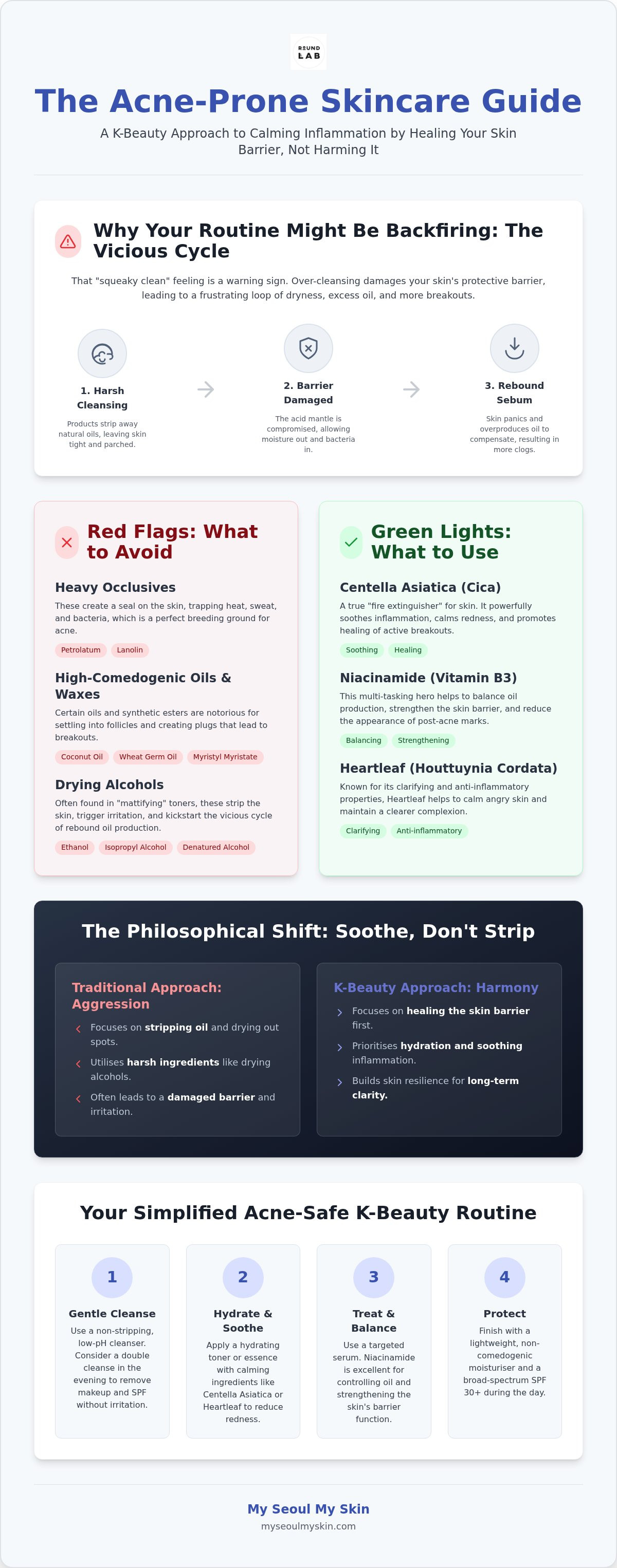
That "squeaky clean" feeling after washing is actually a major warning sign. It means you've stripped away the essential lipids your skin needs to stay resilient. When your skin detects this sudden dryness, it panics. It triggers a rebound effect, producing even more sebum to compensate for the perceived loss of moisture. This leaves you in a frustrating loop: your skin feels tight and dry, yet it looks oily and develops more spots. Maintaining a slightly acidic pH balance is crucial because it creates an environment where acne-causing bacteria struggle to survive. Dehydration is a primary driver of excess oil production. If you want to master skincare to avoid with acne and what to use, start by ditching the harsh soaps that leave your face feeling parched.
Comedogenicity Explained: The Science of Clogged Pores
What actually makes an ingredient pore-clogging? On a molecular level, some substances have a structure that settles into the follicle, mixing with dead skin cells and hardened oil. This creates a plug. Whilst the Comedogenic Scale is a helpful guide for choosing skincare to avoid with acne and what to use, it isn't a definitive law. Formulations matter. A tiny amount of a "clogging" oil in a well-balanced cream might be perfectly fine, whereas a pure oil might cause chaos. If you notice tiny, skin-coloured bumps that don't come to a head, you're likely seeing clogged pores. If the area is itchy and red, it's more likely an allergic reaction or sensitivity. Focus on how your unique skin reacts rather than just following a list.
The "Red Flag" Ingredients: What to Avoid with Acne-Prone Skin
Identifying the right products is a total minefield. You might think you're helping your skin, but certain heavy hitters are actually secret saboteurs. It's helpful to review dermatologists' tips on habits that worsen acne to see how daily choices impact your clarity. Heavy occlusives like Lanolin and Petrolatum are common offenders. They create a thick seal on the skin. Whilst this is great for extreme dryness, it traps heat, sweat, and bacteria against acne-prone pores. This creates the perfect breeding ground for new spots to form overnight.
Heavy Oils and Waxes to Strike Off Your List
Coconut oil is often praised in the clean beauty world, but it's a high-comedogenic nightmare for most. It sits right at the top of the risk scale. Wheat Germ oil is another heavy hitter to skip. You should also watch out for synthetic esters like Myristyl Myristate. These ingredients feel silky and light on your fingertips, but they clog deep within the follicle. Don't let "Oil-Free" labels fool you. Many products replace traditional oils with these synthetic waxes that are just as likely to cause congestion. Learning about skincare to avoid with acne and what to use requires looking past the front of the bottle and into the fine print of the ingredient list.
The Alcohol Trap: When "Mattifying" Becomes Irritating
Not all alcohols are created equal. You don't need to fear fatty alcohols like Cetyl or Stearyl alcohol; they actually help stabilise formulas and soften skin. The real enemies are drying alcohols like Ethanol, Isopropyl Alcohol, and Denatured Alcohol. These are often found in mattifying toners designed for oily skin. They might give you an instant matte look, but they aggressively disrupt your lipid layer. This invites inflammation and leaves your barrier wide open to infection. Instead of drying out your skin, focus on balancing it with lightweight, breathable layers that don't compromise your protection.
Look beyond your face cream too. Fragrance is a top irritant that triggers low-level inflammation, making breakouts redder and more persistent. Haircare products often contain heavy silicones or oils that migrate to your forehead and jawline whilst you sleep. Identifying skincare to avoid with acne and what to use instead is the first step toward a calm, happy complexion. If you're ready to swap these red flags for safer alternatives, browse our curated selection of acne-safe K-Beauty to find formulas that truly respect your skin barrier.
K-Beauty vs. Traditional Acne Treatments: The Shift from Stripping to Soothing
Traditional Western treatments often adopt a "scorched earth" policy. They rely on high-strength peroxides to dry out spots, but this often leaves the surrounding skin red, flaky, and vulnerable. K-Beauty offers a refreshing alternative. It focuses on calming the "fire" of inflammation first. By using lightweight, acne-safe layers, a process known as "Skin Flooding", you can hydrate the skin without clogging a single pore. This method is essential for anyone researching how to get glass skin with Korean skincare whilst managing active breakouts.
Instead of harsh chemicals that strip the skin, Korean formulations prioritise botanicals like Centella Asiatica and Mugwort. These aren't just trendy additives. They are backed by a clinical review of K-Beauty ingredients that proves their efficacy in reducing redness and repairing the skin barrier. When you understand skincare to avoid with acne and what to use, the shift from stripping to soothing becomes common sense. It's about working with your skin's natural biology rather than against it.
Why Lower Percentages Often Deliver Better Results
The "Slow and Steady" philosophy is a cornerstone of the Seoul-sourced approach. You don't always need 2% Salicylic acid to see a difference. In fact, a 0.5% concentration can often be more effective because it doesn't trigger a massive inflammatory response. By reducing irritation, you actually prevent post-acne marks (PIH) before they even start. K-Beauty brands masterfully buffer these active ingredients with soothing extracts, ensuring the treatment reaches the pore without damaging the surface. This balance is the key to long-term clarity and a resilient complexion.
The Power of Fermentation in Acne Care
Fermentation isn't just for your diet. Ingredients like Galactomyces help refine skin texture and brighten tone without the need for physical scrubbing. These fermented extracts support a healthy skin microbiome, which acts as your natural defence against breakouts. If you're confused about where to start, the Numbuzin numbering system is a game-changer. It helps you identify exactly which texture needs your skin has, whether it's deep hydration or gentle resurfacing. This level of curation is exactly what makes skincare to avoid with acne and what to use so much easier to navigate for the modern consumer.
The "Green Light" Ingredients: What to Use for Calmer, Clearer Skin
Shifting your focus from skincare to avoid with acne and what to use instead is the turning point for a clearer complexion. Niacinamide is the undisputed gold standard for this journey. It regulates sebum production whilst visibly refining the appearance of pores and evening out post-breakout marks. If you are struggling with red, angry inflammation, Centella Asiatica (often called Cica) acts as a literal fire extinguisher to calm the heat. Heartleaf is another K-Beauty secret for gentle decongestion. It helps clear the path for healthier skin without the irritation common in traditional formulas. For those who need healing, Propolis provides a natural antibacterial boost that repairs the skin without any drying side effects.
BHA and PHA: The Gentle Exfoliators
Salicylic Acid (BHA) remains a vital tool because it is oil-soluble. This allows it to travel deep into the pore to dissolve the "glue" holding dead skin and sebum together. However, if your skin is ultra-sensitive, you should introduce PHAs like Gluconolactone. These clever molecules have a larger structure, meaning they exfoliate the surface without penetrating deep enough to cause a sting. Using these gentle exfoliators ensures you achieve a smoother texture whilst keeping your moisture barrier resilient. Start slow, perhaps twice a week, and listen to your skin’s needs as you build tolerance.
Hydration for Oily Skin: The Oil-Free Heroes
It is a common myth that oily skin doesn't need moisturiser. In reality, dehydration often triggers the rebound oiliness that leads to more breakouts. You need water-based hydration to maintain a healthy balance. Hyaluronic Acid and Glycerin are the perfect oil-free heroes for this task. They pull moisture into the skin layers without adding weight or clogging pores. Panthenol (Vitamin B5) is another essential for deep repair. It effectively soothes the "tight" feeling that often follows active treatments, helping your barrier recover faster.
Opt for gel-type moisturisers that offer an immediate cooling effect upon application. These lightweight textures provide a refreshing burst of hydration that sinks in instantly, leaving your skin feeling bouncy rather than greasy. Mastering the list of skincare to avoid with acne and what to use allows you to build a routine that actually supports your long-term aesthetic goals. Ready to transform your routine? Shop our curated selection of acne-safe K-Beauty and enjoy free UK delivery on all orders over £20.
Curating Your Acne-Safe K-Beauty Routine with My Seoul My Skin
Building a routine that actually works requires more than just buying the latest viral product. It is about creating a synergy between ingredients that heal rather than hurt. Now that you know the skincare to avoid with acne and what to use, let’s organise those green-light ingredients into a simple, effective four-step regimen. This structured approach ensures your skin barrier remains intact whilst effectively targeting congestion and redness.
- Step 1: The Double Cleanse. Start with a non-comedogenic oil cleanser from Banila Co or Abib to dissolve SPF and makeup. This step is crucial for removing the oil-based debris that standard washes miss. Follow up with a water-based cleanser to leave the skin perfectly prepped.
- Step 2: The Calming Toner. Apply a toner rich in Heartleaf or Centella Asiatica. These botanicals act as a soothing base layer, instantly reducing inflammation and balancing your skin's pH after cleansing.
- Step 3: Targeted Treatment. Use a specialised serum to address your unique concerns. Whether you need to fade marks or refine texture, the Numbuzin UK range is a fantastic place to start. Their numbering system makes it easy to find exactly what your skin needs.
- Step 4: Lightweight Hydration. Seal everything in with a breathable, acne-safe cream. Look for gel-based textures that provide moisture without the heavy waxes we discussed in the red-flag section.
The My Seoul My Skin Advantage
Sourcing your products directly from Seoul ensures you are getting the most advanced acne technology available. At My Seoul My Skin, we act as your knowledgeable curator, filtering through thousands of options to bring you only the best. We offer free UK delivery on all orders over £20, making it easier than ever to stock up on your favourite essentials. If you are a beginner, our curated kits take the guesswork out of ingredient checking, providing a safe path to a clearer complexion.
Final Tips for Long-Term Clarity
Consistency is the secret ingredient in any successful routine. You must follow the 6-week rule; your skin needs time to cycle through its natural renewal process before you see the full impact of your new K-Beauty routine. Patience is vital. Always perform a patch test on a small area of your jawline when introducing a new product to ensure it doesn't trigger a reaction. By mastering skincare to avoid with acne and what to use, you are taking control of your skin's future. Browse our curated acne collection today and start your journey toward a healthy, radiant glow.
Ready to Reclaim Your Radiance?
Achieving clear skin doesn't have to be a battle of attrition against your own face. You now have the tools to identify the hidden saboteurs in your cabinet and replace them with formulas that respect your delicate acid mantle. By ditching heavy occlusives and harsh drying alcohols, you allow your barrier to heal and naturally defend itself against breakouts. Embracing the K-Beauty philosophy means choosing soothing botanicals like Centella and Heartleaf over the aggressive, stripping treatments of the past.
Navigating the complex world of skincare to avoid with acne and what to use is much simpler when you have a trusted guide. At My Seoul My Skin, we've done the hard work for you by selecting 100% authentic products sourced directly from Seoul. Our selection is expertly curated specifically for sensitive and acne-prone skin to ensure every step of your routine is safe and effective.
Shop our curated collection of acne-safe K-Beauty at My Seoul My Skin and enjoy free UK delivery on all orders over £20. It's time to stop the cycle of irritation and start your journey toward the healthy, glowing complexion you deserve.
Frequently Asked Questions
Is Korean skincare safe for cystic acne?
Yes, provided you choose products that focus on reducing inflammation and repairing the barrier. Cystic acne involves deep-seated infection, so ingredients like Centella Asiatica and Mugwort are excellent for calming the area without causing further irritation. Whilst severe cases may require medical advice, a gentle routine prevents the surrounding skin from becoming compromised. Focus on non-comedogenic formulas from brands like Dr.Jart+ to support your skin during the healing process.
Can I use a face oil if I have acne-prone skin?
You can, but you must be extremely selective about the oil type. High-linoleic oils like Rosehip or Squalane are generally safe. When researching skincare to avoid with acne and what to use, you'll find that heavy, high-comedogenic oils like Coconut or Wheat Germ are the main culprits. Always check ingredient lists for hidden synthetic esters that might feel light on the surface but clog pores deep within the follicle.
How long does it take for acne-safe skincare to show results?
You should expect to see initial calming within a few days, but significant changes usually take at least six weeks. This timeline aligns with your skin's natural 28-day renewal cycle. Consistency is your best friend here. Don't be tempted to swap products every week; give your barrier time to repair and your pores time to clear out properly for a lasting, healthy and radiant glow.
What is the best K-Beauty ingredient for fading acne scars?
Niacinamide and Snail Mucin are the standout heroes for fading post-inflammatory hyperpigmentation. Niacinamide works by inhibiting pigment transfer, whilst Snail Mucin accelerates the skin's regenerative process. The Numbuzin No. 5 range is a firm favourite for targeting these stubborn marks. These ingredients help even out your skin tone without the need for aggressive bleaching agents or harsh physical scrubs that could trigger fresh breakouts and more inflammation.
Should I stop using moisturiser if my skin is very oily?
No, skipping moisturiser often makes oily skin worse. When your skin is dehydrated, it produces more sebum to compensate for the lack of water. The secret is to use oil-free, gel-based hydrators that provide water-based moisture without any heavy waxes. Look for products containing Panthenol or Hyaluronic Acid. These ingredients keep your skin bouncy and balanced without adding any unwanted shine or congestion to your pores.
Can hair products really cause breakouts on my forehead?
Yes, this is a common issue known as pomade acne. Shampoos, conditioners, and styling products often contain heavy silicones or oils that can migrate to your forehead and jawline during the day or whilst you sleep. If you notice persistent spots along your hairline, try washing your face after rinsing your hair products. This ensures any residue is thoroughly removed from your skin before you start your evening skincare routine.
Is double cleansing necessary for acne-prone skin?
It is highly beneficial if you wear SPF or makeup. A single wash often fails to break down oil-soluble debris, leaving a film that can clog pores. Using a non-comedogenic oil cleanser from Banila Co followed by a gentle foaming wash ensures a deep clean. This is a vital step in skincare to avoid with acne and what to use to keep your complexion clear and perfectly refreshed.
What is the difference between purging and breaking out?
Purging occurs when an active ingredient like BHA speeds up cell turnover, causing existing clogs to surface faster in areas where you usually break out. This usually clears up within a few weeks. A standard breakout happens in new areas and is often a reaction to an irritating or pore-clogging ingredient. If the spots are itchy, red, and persistent in new locations, it is likely a reaction rather than a purge.